
Moloko Guide to Planning your Own Cycling Holiday

You probably already know this…but I (Alex, Moloko co-founder) organise cycling trips for a living. After years of planning epic holidays for our customers, I’ve learned what actually makes a successful cycling trip.
So here’s everything I’d tell a friend who wants to plan their own trip...
Choose your destination sensibly
This is where it all starts. You need to be realistic about two things: your fitness level and what you actually enjoy on the bike.
If you love chilled rides, coffee stops, beautiful landscapes and taking your time, then somewhere like Mallorca is perfect. You can ride stunning loops without needing to smash 150km a day with huge elevation. The north of Portugal and Provence Côte d'Azur are similar: relaxed riding, great food, gorgeous villages, culture everywhere...
If you’re into iconic climbs and love getting into a rhythm on long ascents, then the French Alps or the Pyrenees are calling your name. Big mountains and legendary cols: Croix de Fer, Tourmalet, Alpe d'Huez...if those names make you excited, you already know where you should be going.
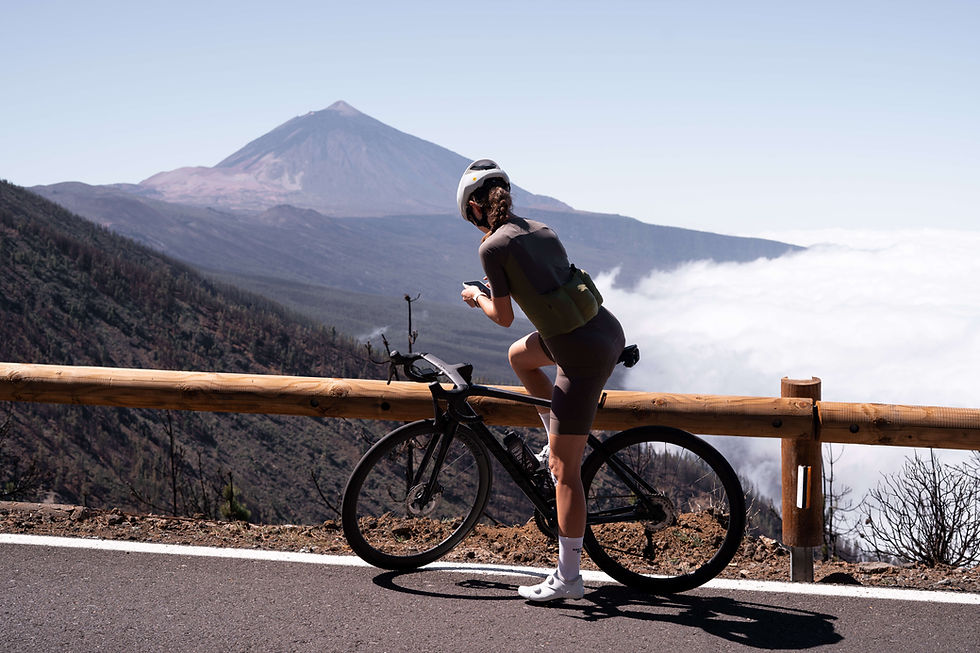
If you want a winter training camp and you’re happy to suffer a little bit, Tenerife is your dream: there are no flat roads there, you're either climbing or descending. The views will be your biggest reward with the backdrop of Volcano Teide and a few stunning national parks.
Think beyond the bike
When I organise trips, cultural immersion matters a lot: I want good food. I want villages. I want places to wander. I want backup plans.
Let’s say you’re in Andalusia and it’s raining. You can head to Granada and visit the Alhambra, where you'll find incredible architecture, amazing food, proper cultural experience. Your day isn’t “ruined” just because you didn’t ride. Then let's compare that to somewhere like Calpe. The cycling is fantastic and the climbs are big. But culturally? There isn’t too much going on. But that might suit you perfectly of course, it all depends on what you're looking for.


So look ahead and check what else is there to do. A great cycling week feels smoother when you’re not relying 100% on perfect weather.
Go at the right time
This one can be a little tricky. If you search best times of year to go to Mallorca, for example, peak summer is usually the recommendation that pops up. However, as a cyclist, that’s often exactly when you don’t want to go! Mallorca in peak summer? This will be way too hot, and too busy. Cycling weather sweet spot is usually between 17°C and 26°C. Once it creeps past 28°C, riding gets hard quickly.
However, mountain destinations like the Alps, the Pyrenees or the Dolomites are different. They’re at their best in summer because of the altitude. June and September are great. July and August are busiest, but honestly, the roads in the Alps and Pyrenees never feel overcrowded, and all the restaurants are open so it's a win win!


Where you stay can make or break a trip
This is the most complicated part, simply because often the best place to stay as a cyclist is different than the best place to stay as a tourist.
For example, in Tenerife everyone will recommend you to stay in the south where it's warmer, there's more more restaurants etc. It sounds logical, but if you’re on a cycling trip without a car, staying in the south traps you at the bottom and you’ll end up climbing Teide over and over. In addition, the south of the island is very touristy and has lost its authenticity, so not our first choice.
When your bike is your only transport, you want 2 things:
food options within easy reach
multiple varied loops from your door with access to different roads
In mountain regions like the Alps or the Pyrenees , you will want to stay near a junction between 2 to 3 valleys in order to not start every ride with the same climb.
PRO TIP: Hiring a car can completely change your trip. If there are two of you, most rental cars can take two bikes in the back with seats folded down. No wheel removal needed, just a towel between them. It gives you flexibility and makes non-riding days easier too.

Some other key things to check check:
Is there safe bike storage?
Are bikes allowed in rooms?
Is there a pump?
Is there a bike shop nearby?
The small details matter.
Plan your routes properly
Now for the most exciting part: route planning! Komoot is my go to app for route planning because it's got the street view function built in. It enables you to check the road surface, if it's quiet or full of traffic... and to check what the backroads look like for the views.
If I plan routes somewhere I have never been to, I want to check absolutely everything.
Then there's the food stops. If you’re doing a 150km loop, know where your water and coffee are coming from. Tenerife again is the perfect example. You can climb Teide for 50km with no water stop. That’s fine as long as you know and carry enough with you.
Also, check opening times...especially in France! We once rode a beautiful 100km loop in Provence assuming villages would have food. And village after village after village
after village everything was shut. No food, no water, no nothing. Add a puncture to that day and it became “character building” ... But we learn from my mistakes!

Logistics: Bring Your Bike or Rent?
There are pros and cons for both options. I personally always travel with my bike because I'm used to it. It's the perfect fit, I like my saddle and mainly it's a really great bike so everything about it for me makes it worth it. I also travel every single month, so I knew it was worth investing in a good bike box.
I would recommend hiring a bike in two situations:
You don't have a bike bag / box: by the time you rent a bike box, plus the cost of the bike on your flight, it might be the same to rent out there and save yourself the hassle.
Your bike is not the best bike: a rental bike might be lighter, give you more gears for climbing or maybe you just want to try a different bike because you're in the market for a new one. A cycling holiday would be a really good opportunity to try it.
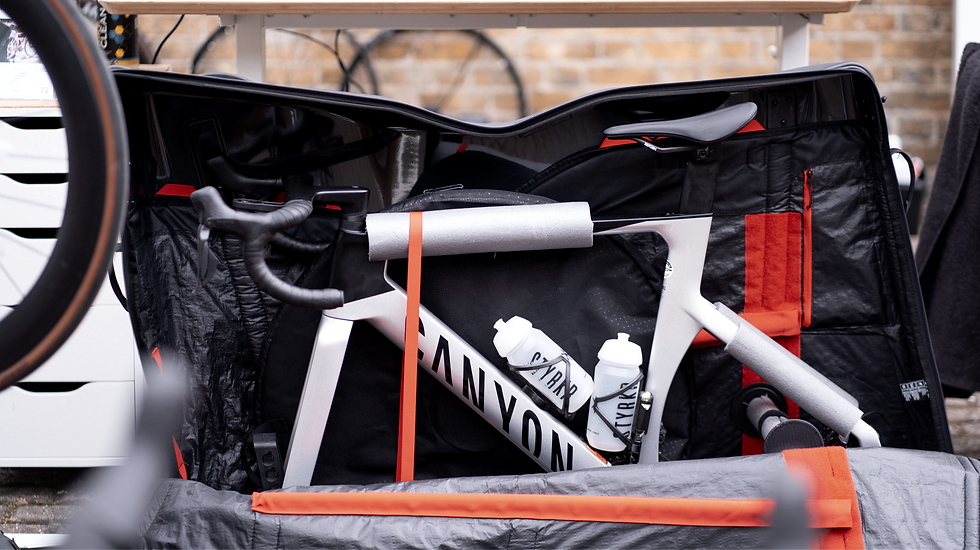
If you opt to travel with your bike, don't assume all taxis will be happy taking a bike box. Plan ahead and maybe even ask your hotel for help on how to pre-book a taxi service for you that will take bike boxes and people. Otherwise, you might be a little stranded.
Make a proper packing list
I travel every month and always use my packing list - in fact the one time I didn't I forgot my Di2 charger...
You must think about tools, repairs, nutrition... etc.
Then on the clothing side of things: layers are key!
You may not think you'll need them, but if you check the weather at elevation and you'll be conviced: at 3,000 metres some packable items can honestly save your day.
Feel free to download our list if you'd like to use it:
I have also made a YouTube video to help you pack, you might find it helpful:
Planning your own cycling holiday is incredibly rewarding. When it’s done right, it’s one of the best experiences you can have on a bike.
However, if you’d rather skip the planning and just ride, that’s exactly why we organise trips in epic destinations every month:


Comments