
5 Questions Everyone Asks About the Canyon Aeroad

We always get asked the same five questions about the Canyon Aeroad, both online and in our London showroom. So we sat down with Paul, Moloko co-founder, to answer them all.
If you’re considering the Aeroad and wondering whether it’s really the right bike for you, this should help you make a decision.
1. Is the Canyon Aeroad too aggressive for an average rider?
This is probably the most common concern, and it’s an understandable one. With its aero seat tube, straight top tube and race-inspired look, the Aeroad does look aggressive.
However, Canyon has put a lot of effort into making the Aeroad more comfortable for everyday riders over the years. The biggest change? The front end! Earlier models had a much lower and longer front end, which could be tough to handle on long rides or steep climbs. But now, Canyon has raised the front end, making the riding position much more accessible and comfortable.
For pro riders, there are still aggressive options, like a negative-degree stem similar to what you’d see on bikes ridden by elite athletes like Mathieu van der Poel. But for most riders, the stock setup is a lot more forgiving.
In fact, the geometry is nearly identical to the Canyon Ultimate now. If you set both bikes up with the same saddle height and position, your contact points (hands, saddle, and pedals) will be almost the same. The main difference? It’s all about stiffness, not fit.
The Aeroad’s rear triangle incorporates more carbon and aero profiling, making it stiffer and more efficient at transferring power. Compared to the Ultimate, which uses thinner tubing for weight savings and vibration damping, the Aeroad feels firmer. Some riders love that stiffness, while others prefer the more compliant feel of the Ultimate.
Plus, with modern tire clearances allowing for up to 32mm tires and the option to run tubeless at lower pressures, the Aeroad is far more comfortable than its reputation suggests.

2. Does the Canyon Aeroad climb well?
You might be surprised by this one! Paul actually moved away from the Aeroad years ago because older versions felt uncomfortable on long climbs. He switched to the Ultimate, which he adored for its relaxed setup and climbing prowess.
When he tried the newer Aeroad, he was a bit skeptical but ended up genuinely impressed! While the Aeroad isn’t quite as nimble as the lightest Ultimate on steep gradients, the difference is minimal. On climbs below around 6%, the Aeroad can actually feel faster thanks to its stiffness and efficient power transfer.
So, you’re not losing anything significant on climbs, and once the gradient eases, the Aeroad actually really shines!
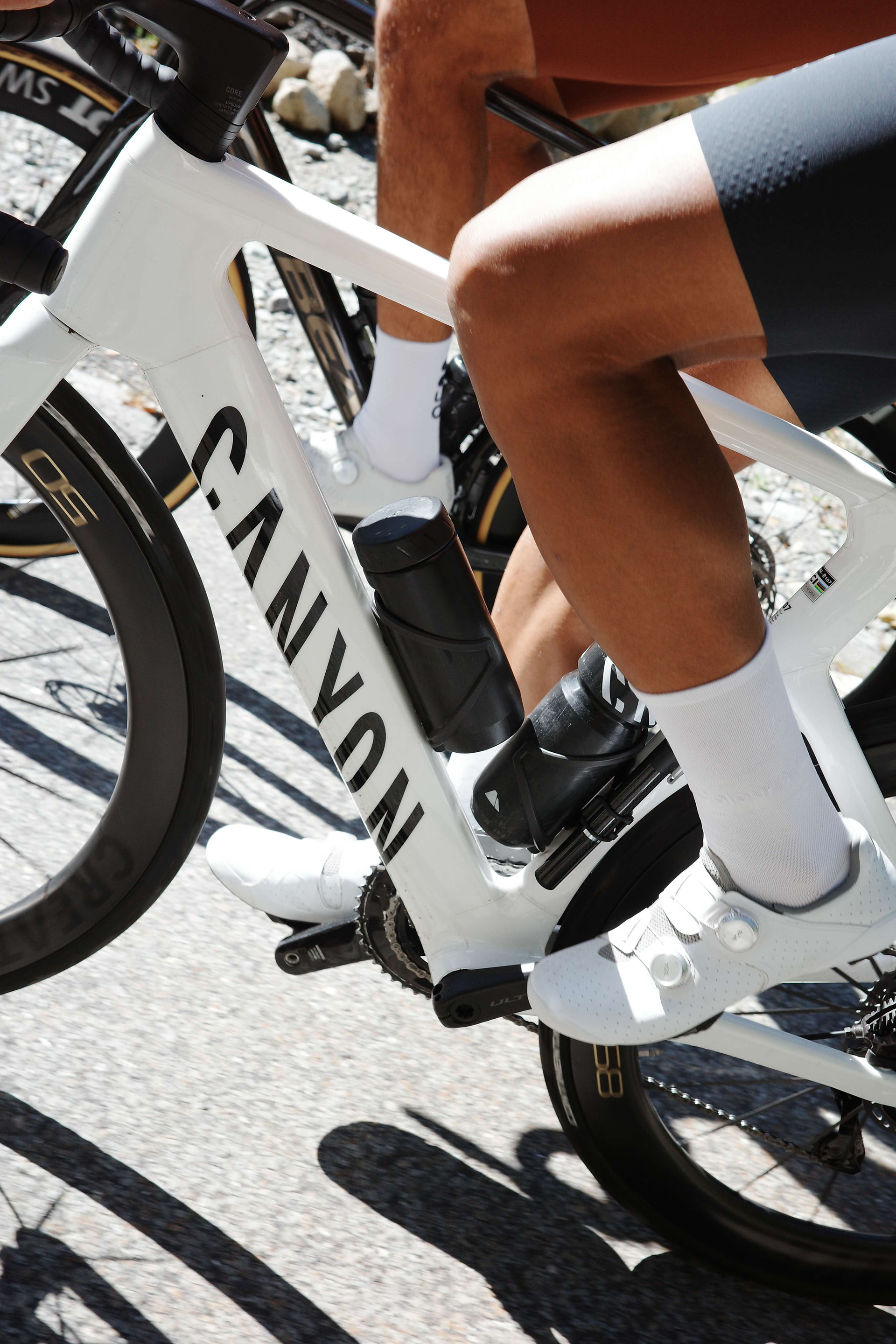


3. Is there a big weight difference between the Aeroad and the Ultimate?
Not really actually! If you compare similar-spec models, like the CF SLX 8 builds with Shimano Ultegra, you’ll find that the weight difference is typically under 400 grams and often closer to 200 grams.
Canyon has worked hard to trim down the Aeroad’s weight while keeping the Ultimate relatively consistent. Even with disc brakes on both bikes, the gap has shrunk significantly.
For most riders, that difference is pretty negligible when you're actually out riding!

4. Is the Canyon Aeroad significantly faster than the Ultimate?
In short: yes, and you can definitely feel it!
When switching from the Ultimate to the Aeroad, many riders immediately notice how quickly the bike picks up speed. The Aeroad feels eager, responsive, and fast, even without consciously pushing harder.
In real-world situations, like short, punchy efforts or rolling terrain, the Aeroad consistently delivers higher speeds. It’s particularly noticeable when you’re accelerating repeatedly (eg: Park laps or fast group rides).
Think of it this way: it almost feels like a time trial bike with drop handlebars. The best part? Despite its speed, the Aeroad isn’t harsh. Thanks to Canyon’s design work on the seatpost and rear end, it remains comfortable enough for regular training and longer rides.

5. Is the Canyon Aeroad a good triathlon bike?
Absolutely, especially for casual and occasional triathletes. If you’re only doing one or two triathlons a year and don’t want (or can’t justify) a dedicated time trial bike, the Aeroad is a fantastic choice.
Canyon has designed features that make it particularly suitable for triathlons, including the Gear Groove handlebar system, which enables you to add clip-on tri bars to your cockpit. This solves a common issue with aero road handlebars where traditional clip-ons often don’t fit properly or feel unstable.
While the Gear Groove extensions aren’t the cheapest option, they’re much more affordable than buying a separate TT bike, and effectively give you two bikes in one!
For full-time triathletes or those racing Ironman at a high level, a dedicated TT bike like the Speedmax still makes sense. But for most riders, the Aeroad does an excellent job.


Credit: canyon.com
So, who is the Canyon Aeroad for?
The Aeroad is perfect for:
Riders who regularly hit the road with a club or group
Those who enjoy fast, sporty riding
Anyone looking for one bike that can handle speed on the flats, rolling climbs, and occasional triathlons
It’s also a great choice for riders pushing further into performance cycling: everything from criteriums to competitive racing.
Comfortable when set up correctly, incredibly fast, and highly adaptable, the Aeroad is one of the most popular bikes we see in the showroom, accounting for around 30–40% of test rides!
If you’re considering one, a test ride is the best way to know for sure. It lets you check sizing, setup, and feel, and ensures it’s the right bike for how you actually ride.


Comments